- South Africa's water infrastructure is under real strain: in 2023, 46% of municipal water systems had poor or bad microbiological quality, up from 5% in 2014.
- Rivers and dams that feed our supply carry sewage, industrial chemicals such as PFAS, and in mining areas, acid mine drainage, heavy metals and radioactive elements.
- Many of these contaminants do their damage slowly, over years of exposure, which is why what's in your everyday water matters.
- Results differ hugely by area. Most large metros scored well, so the honest answer is: it depends where you live.
The short answer
It depends where you live, and that's the problem. The Department of Water and Sanitation's own reports show a system that has declined sharply over the last decade. Many large metros still deliver good-quality water, but in much of the country, what comes out of the tap can no longer be taken for granted.
What the government's own reports found
The Department of Water and Sanitation audits the country's water services in three reports: Blue Drop for drinking water, Green Drop for wastewater, and No Drop for water losses. The latest full reports found:
- Drinking water (Blue Drop, 2023): of 958 water supply systems, 46% had poor or bad microbiological compliance, compared with 5% in 2014. Gauteng and the Western Cape performed best, but even there, about one system in five fell short.
- Sewage treatment (Green Drop, 2022): 334 of 850 municipal wastewater treatment works, or 39%, were in a critical state. When these works fail, partly treated or raw sewage ends up in the rivers that downstream towns draw their water from.
- Water losses (No Drop, 2023): 47% of municipal water is non-revenue water, lost to leaks, burst pipes, faulty meters and illegal connections, up from 37% in 2014. Leaking, low-pressure pipes are also a route for contamination to get in.
The consequences are real. In 2023, a cholera outbreak in Hammanskraal, north of Pretoria, killed more than 20 people within weeks, in an area with long-standing water and sewage problems.
What's in our rivers and groundwater
- Sewage: the South African Human Rights Commission found the Vaal River, which supplies water to an estimated 19 million people, "polluted beyond acceptable standards" by untreated sewage from failing treatment works.
- PFAS ("forever chemicals"): researchers have measured PFAS in Western Cape rivers, in Gauteng's Hartbeespoort and Roodeplaat dams, and in tap water. A 2025 study found that average levels of four PFAS in the South African tap water it tested were above US EPA limits.
- Acid mine drainage: when old gold mines in the Witwatersrand basins flood, the water turns acidic and dissolves metals from the rock. Government measurements of this water have found sulphate, iron, manganese and uranium far above discharge standards, and the state has had to build treatment plants to stop it flowing into rivers.
- Uranium and radioactive elements: gold ore on the Witwatersrand contains uranium, and decades of mining have carried it into streams such as the Wonderfonteinspruit on the West Rand. Uranium also occurs naturally in groundwater in parts of the Northern Cape.
Why these contaminants matter
Most of these don't make you sick from a single glass. They build up, or do their damage, over years of exposure, which is why what's in your everyday water matters more than what's in an occasional one.
| Contaminant | Where it comes from | What long-term exposure can do |
|---|---|---|
| Bacteria such as E. coli and cholera | Sewage from failing treatment works and leaking pipes | Diarrhoeal disease, which can be severe or fatal, especially for children and the elderly |
| Lead | Old pipes, solder and fittings | The WHO says there is no known safe level. It harms the developing brain and nervous system in children and builds up in bones over time |
| Arsenic | Natural rock and mining | Long-term intake is linked to skin lesions and to skin, bladder and lung cancer (WHO) |
| Uranium and radium | Gold mining and natural deposits | Uranium mainly affects the kidneys; radioactive elements add to your lifetime radiation dose |
| PFAS | Industry, firefighting foam and consumer products | They stay in the body for years. The WHO's cancer agency, IARC, classifies PFOA as carcinogenic to humans and PFOS as possibly carcinogenic |
| Mercury and cadmium | Industrial and mining pollution | Build up in the body and can damage the kidneys |
| Nitrate | Fertilisers and sewage | Particularly dangerous for bottle-fed babies, where high levels can reduce the blood's ability to carry oxygen |
What you can do about it
Boiling kills bacteria, but it doesn't remove metals, PFAS or radioactive elements; it concentrates them slightly as the water evaporates. Removing those takes proper treatment. Reverse osmosis is one of the most effective: US EPA regulations name it among the best available technologies for uranium, radium and other radioactivity, and EPA research found reverse osmosis systems can greatly reduce PFAS.
That's why remineralised water exists. Instead of trusting a source, a river or a pipe network, it takes water back to almost zero, removing heavy metals, PFAS, uranium and other radioactive elements, nitrates, pesticides and bacteria. Then it puts back natural minerals in measured amounts, the way water gathers them from rock. You know what's been taken out, you know what's been put back, and it's the same in every bottle. Here's how remineralised water works.
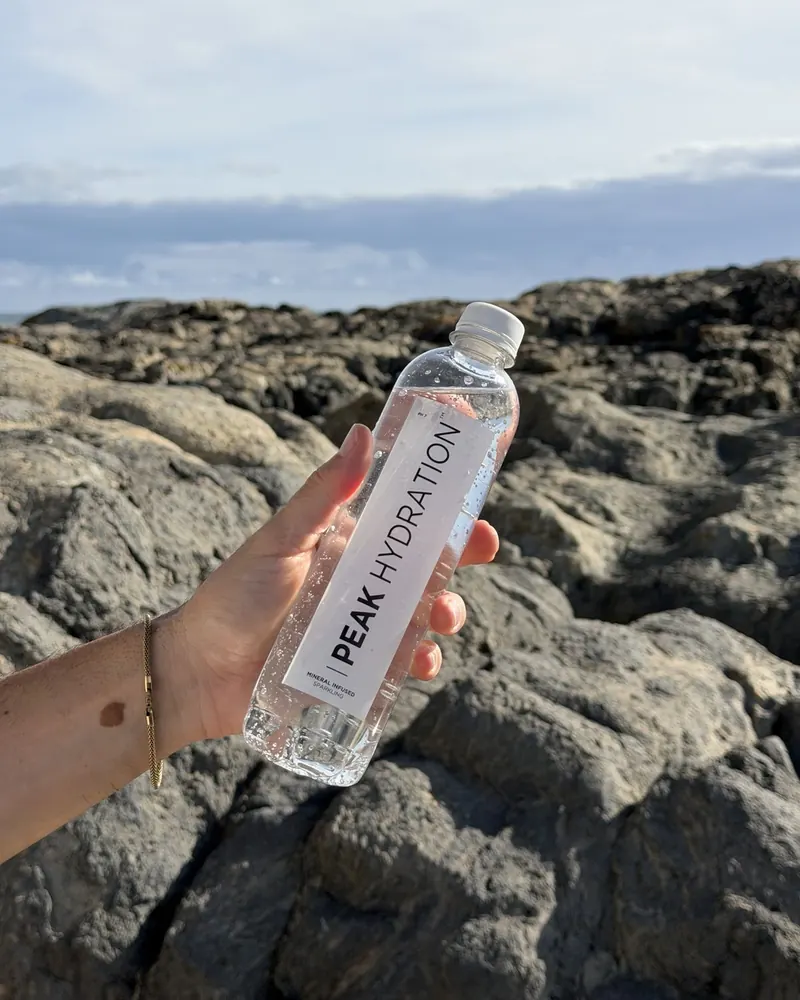
Peak Hydration is remineralised water, made in South Africa. Find it near you.
Questions, answered
Is it safe to drink tap water in South Africa?
Does boiling water remove heavy metals and PFAS?
How do you remove PFAS, uranium and heavy metals from water?
- Release of the 2023 Blue Drop, No Drop and Green Drop progress reports, Department of Water and Sanitation
- Half of South Africa's sewage treatment works are failing (Green Drop 2022), GroundUp
- Official reports reveal the scale of the water crisis (No Drop 2023), Daily Maverick
- Acid mine drainage: release of the Central Basin's treated water, South African Government, 2014
- Cholera death toll rises to 20, SAnews, 2023
- Vaal River sewage contamination inquiry, South African Human Rights Commission, 2021
- PFAS in Hartbeespoort and Roodeplaat dams, Water SA
- PFAS in South African drinking, bottled and surface water, ACS ES&T Water, 2025
- Reply to Parliament on radioactivity in the Wonderfonteinspruit, Department of Water Affairs and Forestry, 2007
- Uranium in the groundwater of Namaqualand, Northern Cape, University of Pretoria, 2020
- No safe level: act now to end lead exposure, World Health Organization, 2025
- Arsenic fact sheet, World Health Organization
- IARC Monographs volume 135: PFOA and PFOS, International Agency for Research on Cancer, 2023
- Best available technologies for radionuclides, 40 CFR 141.66, US Environmental Protection Agency
- Identifying drinking water filters certified to reduce PFAS, US Environmental Protection Agency